Stress is the Age of Acceleration and AI is the game changer we all have been waiting for. Now it is here you can move faster easier. Take the ride and here is what you need to know.
I never thought the word stress would define my 40s so relentlessly. And yet, here I am—waking up to inboxes overflowing with automation updates, AI-powered dashboards, and digital tools that promise efficiency but leave me feeling emotionally bankrupt.
This new era, driven by artificial intelligence, isn’t just reshaping industries—it’s rewriting our identities.
Where once experience and intuition were assets, now they are quietly sidelined by algorithms. Our reality is defined by constant adaptation. A tsunami of digital disruption pulls us out of the comfort of mastery and into the churning sea of perpetual relearning. We are not just growing—we are sprinting to survive.
But let’s pause and ask something crucial: at what cost?
We don’t talk enough about the stress that comes from being a human in the shadow of machines. It’s a subtle pressure, a gnawing whisper telling you you’re outdated unless you become someone new. Again. And again. And again.
We need to ask better questions. Not just “How do I keep up?” but “How do I stay sane?”, “How do I protect my sense of self?”, and “Where do I find the resilience to build a meaningful life while everything around me accelerates?”
This article won’t just highlight the pain. It’ll spotlight how we can cope, how we can connect, and what our lives could look like at 40, 50, and 60 when we stop trying to outpace the machines—and start reclaiming our power as humans.
Let’s begin with understanding how AI, with all its brilliance, also brings a wave of stress that reshapes how we work, live, and relate to one another.
The Pressure of Perpetual Improvement
Everywhere I turn, I see the same headline: “Adapt or fall behind.” It’s not just encouragement—it’s a warning. A veiled threat whispering through industries, boardrooms, social media feeds, and even our own inner voices. That phrase carries with it a shadow we’ve grown used to: stress.
Artificial intelligence, for all its incredible advantages, has planted a paradox at the center of modern life. It pushes boundaries, unlocks innovation, and promises liberation from mundane tasks. Yet, in its wake, it leaves something very human—and very heavy: the relentless stress of perpetual improvement.
We are taught to measure ourselves against machines. The algorithms don’t sleep, don’t hesitate, don’t second-guess. They don’t feel stress, but they distribute it freely. If AI can code, create, calculate, and even converse better than I can, what does my value become? Who do I need to become to be “worth keeping around?”
For many, the answer seems clear: you must evolve—fast.
But this imperative breeds quiet panic. You’re no longer evaluated on what you’ve mastered, but on how quickly you can learn again. How fast you pivot. How seamlessly you integrate new digital tools. Even the idea of a stable skill set is becoming obsolete. Welcome to the performance lock-in.
And beneath this performance pressure, stress grows—not because we’re weak, but because our environment is relentless.
In coaching, I hear stories of executives who feel like impostors in their own fields, entrepreneurs who fear redundancy before their startups even gain traction, mid-career professionals who dread “learning fatigue,” and teachers struggling to keep up with AI-assisted curriculums. The common thread? Stress born of a pace no human was built for.
What makes it worse is the illusion that everyone else is coping just fine.
Social media and glossy webinars tell you that you should be excited about these changes. And yet, behind the scenes, people are burning out. They’re experiencing identity erosion, emotional exhaustion, and deep anxiety. But they’re also afraid to speak up—because vulnerability might be misread as incompetence.
That’s not okay.
We need a new language around progress—one that includes emotional sustainability.
Perpetual improvement is fine for machines. But humans? We need pauses. We need grace. We need reminders that our value doesn’t lie in constant output—but in creativity, care, empathy, intuition… things AI still can’t replicate.
And above all, we need to name the pressure as it is: a chronic, draining source of stress
Stress and Redundancy—A New Psychological Landscape
I remember the first time I truly felt it—not just pressure, but that unfamiliar chill of being replaceable. It wasn’t loud or dramatic. It was quiet. A feature update in software I’d used for years. A function I used to do manually was now automated, faster, and “flawless.” And just like that, I began questioning the value of my experience.
Welcome to the new landscape of stress.
Artificial intelligence doesn’t just transform jobs—it transforms identities. With every technological leap forward, a shadow follows: the creeping sense of redundancy. We used to talk about stress as a reaction to external challenges—traffic, deadlines, demanding bosses. But now, stress is existential. It’s rooted in uncertainty and invisibility. It’s not about what you do; it’s about whether your work, your skills, even your personality, are still relevant.
And it’s not limited to tech workers or the corporate elite. Teachers, coaches, administrators, retail workers—nearly every profession is experiencing a shake-up. The dread of being phased out hits deep. For many in their 40s, 50s, and 60s, it’s not just a career threat—it’s a personal one.
Redundancy carries humiliation. People often internalize it: “If AI can do it better, faster, cheaper… then maybe I don’t matter.” That thought breeds stress not only in the workplace, but at the dinner table, in relationships, even alone in the car after another job interview.
But here’s what we need to remember: your worth isn’t a product of your output.
Redundancy may be technical, but resilience is human. You are not outdated. You are layered with wisdom, intuition, life experience, and emotional intelligence that no neural network can replicate. Stress can trick us into narrowing our identity, to equating ourselves with job titles and task efficiency. But you are so much more than your productivity.
We need to challenge how we define value in an AI world. Because stress thrives in ambiguity—when you’re unsure of your purpose, your place, your impact. So let’s push back. Let’s redefine redundancy from being discarded to being redirected. If a system evolves, so can we—not through panic, but through purpose.
The truth is, this psychological stress isn’t just a personal problem—it’s a cultural one. The language we use around AI and automation often lacks compassion. We say “streamline” and “optimize” but never “heal” or “support.” CoachingAndLife, as a space rooted in growth and reflection, has an opportunity to shift that narrative. To say: we see you, we value you, and you are not obsolete.
This new stress landscape needs a new map. One where emotional agility becomes just as critical as technological agility. Where redundancy doesn’t end a career—it redirects a life towards deeper meaning. Where we honor transition, not fear it.
🛠️ Coping in a World That Won’t Slow Down
Let’s get real: the world isn’t slowing down. AI won’t take a breather. Innovation doesn’t hit pause. So what are we supposed to do when the pace of change feels impossible to keep up with?
We start by refusing to play by the machine’s rules. Because unlike AI, we feel stress, and that’s not a flaw—it’s a feature. Stress is the body’s call to attention. It means something matters. It signals the need for care, not punishment.
So the first shift in coping is reframing. Instead of treating stress as failure, we need to view it as feedback. What is it telling us? That we need rest? That we’re misaligned with our values? That we’re comparing ourselves to an artificial ideal?
Coaching is uniquely powerful here. It turns stress into insight. When you speak your overwhelm aloud, reflect on your pain, and are witnessed in your truth—you begin to reclaim control. Coaching isn’t about solving everything. It’s about giving you space to feel and see clearly.
🌿 Practical Ways to Cope
Let’s break down some strategies that help convert stress into resilience:
- Micro-resets: Take short, deliberate breaks throughout the day. Reset your nervous system to fight back against chronic overwhelm.
- Digital boundaries: Limit your exposure to constant updates and tech upgrades. Curate your inbox and notifications so they don’t dictate your emotions.
- Coaching sessions: Whether 1-on-1 or group-based, coaching provides tools for reflection and forward motion—anchoring you amid change.
- Journaling stress signals: Write down when stress shows up, what triggers it, and how your body reacts. This creates awareness and patterns you can address.
- Community connection: Don’t isolate. Stress thrives in silence. Speak, share, and connect.
- Mental flexibility training: Try cognitive exercises, role-play, or scenario planning to stay mentally nimble in times of uncertainty.
- Recreation without optimization: Do things for joy—not improvement. Paint without trying to be good. Walk without tracking steps. Be without measuring.
🧘 Stress Isn’t the Enemy—Disconnection Is
Ironically, AI can make us feel more alone than ever. We scroll past lives that seem better, smarter, faster. But most people feel exactly like you do. CoachingAndLife exists for this reason—to remind us that we aren’t isolated anomalies. We’re a collective of humans trying to find our rhythm in a digital symphony.
And that rhythm doesn’t have to match the beat of technology. You get to choose your tempo. You get to say, “I’m more than my productivity.” You get to set boundaries, embrace imperfection, and rediscover real rest.
Stress will visit. But with tools, community, and reflection—it doesn’t have to stay.
🧓 Life at 40, 50, and 60 in the AI Era
What does it mean to turn 40 in a world built for speed?
What does it mean to reach 50 in a workplace obsessed with disruption?
And what does it feel like to be 60, told to reinvent yourself as if life just began?
These aren’t rhetorical questions. They’re aching truths. And they are wrapped in one word: stress.
At 40, you begin noticing subtle shifts. Job descriptions suddenly favor “digital natives.” You find yourself explaining your value more than ever before. You want to evolve, you can evolve—but you’re tired. This isn’t burnout from lack of passion. It’s stress from constantly proving you’re still relevant.
At 50, the tone sharpens. You’re expected to mentor while keeping up with the latest tech stack. You’re balancing legacy with innovation, experience with reinvention. And while you offer insight born from decades of work, you’re often met with, “Have you tried ChatGPT?” The underlying message? Be quick. Be young. Be flexible. Or be invisible.
And at 60, you ask bigger questions: What do I do with the life I’ve built if the world seems to want someone newer? Where do I put my wisdom? What space remains for me to contribute meaningfully?
This is where stress morphs into grief. Not for what’s lost—but for what feels erased.
But here’s the counter-punch: YOU are the antidote to AI’s impersonal speed. Your years are not liabilities—they’re layers. Layers of knowing, failing, loving, learning. Layers that algorithms can’t simulate. And in a world saturated with artificiality, authenticity is gold.
If you’re 40, 50, 60, you are poised to lead the resistance—not through rebellion, but through resonance. Through connection, compassion, and presence.
🤝 How Do Humans Team Up?
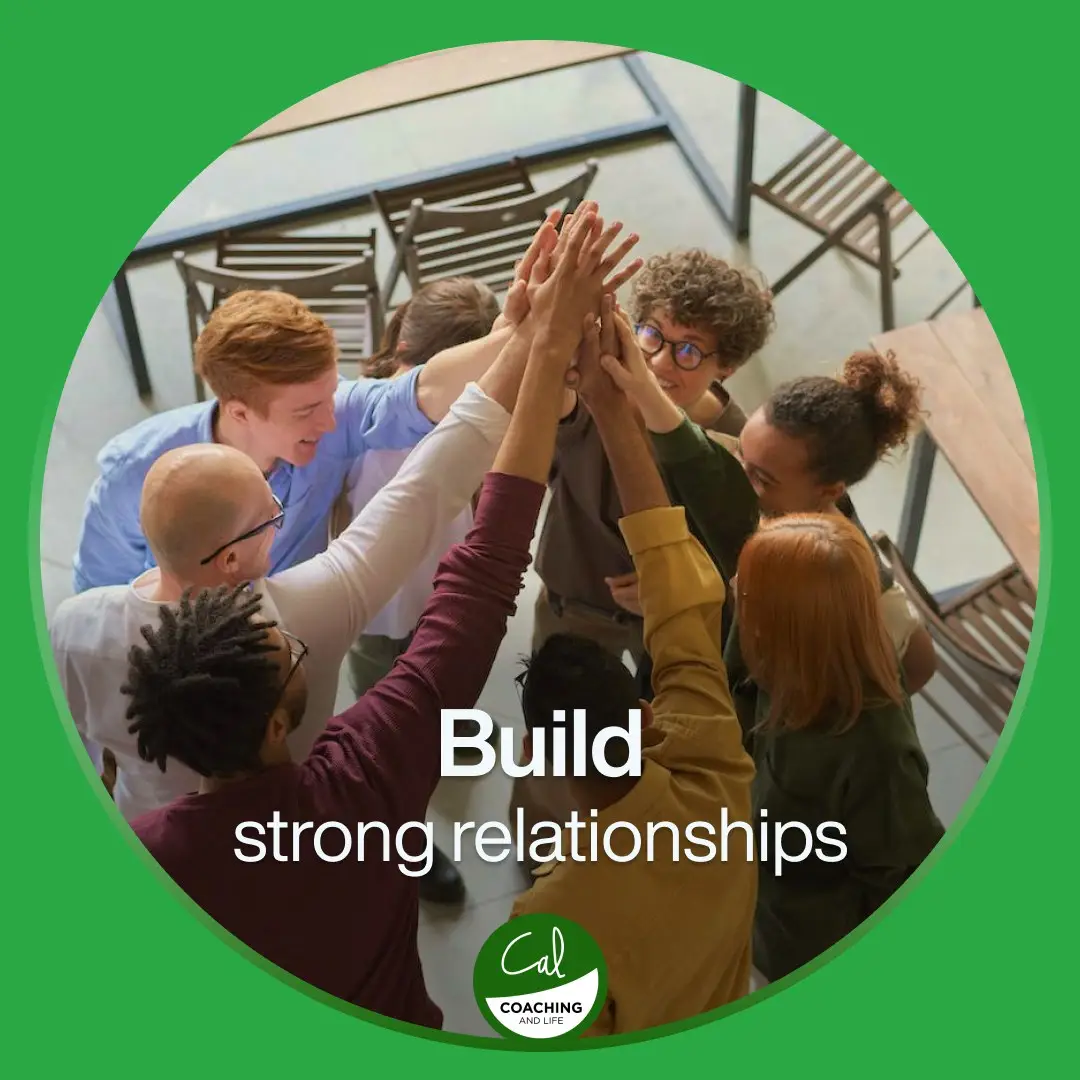
It starts with intention. We don’t drift into community—we build it. Here are ways we can reforge human bonds in an AI-heavy world:
- Local coaching circles: Start or join small, in-person groups focused on shared growth and real talk. CoachingAndLife thrives in creating these spaces.
- Digital detox weekends: Host community events free from screens—walks, storytelling, shared meals. Reclaim the lost art of just being together.
- Skill sharing meetups: Bring generations together to exchange wisdom. You teach deep listening; younger members teach app workflows. Everyone grows.
- Resilience summits: Gather to talk about aging, stress, and purpose—not as weaknesses, but as strengths worth celebrating.
- Virtual friendship hubs: Create spaces where people over 40 can find new friends, mentors, or co-creators online, free from performance pressure.
🌱 Where Does Resilience Come From?
Resilience isn’t downloaded—it’s cultivated. It comes from three sacred places:
- Inner integrity – When you align with your values despite external noise, stress loses its grip.
- Shared vulnerability – Real connection happens when we stop pretending we’re fine and start speaking honestly.
- Purposeful contribution – Offering your insight, your story, your humanity to others—even imperfectly—is power.
You’re not too old. You’re too aware. And the world desperately needs that awareness.
🤝 Team Up—Human Connection as the Antidote to AI Isolation
Stress thrives in silence. And when our daily interactions grow increasingly filtered through screens, dashboards, and automation, something quietly erodes: the comfort of shared humanity.
AI isn’t inherently cold—but its implementation often is. Automated replies, predictive algorithms, and optimized interactions remove friction, yes—but they also strip away nuance, spontaneity, and warmth. As AI streamlines communication, it risks substituting real connection with structured simulation.
So what happens to us? We begin to feel unseen. We begin to stress about our place in a world that no longer requires small talk, empathy, or face-to-face exchange. We grow hyper-efficient yet emotionally unfulfilled.
But humans are wired for belonging, not just productivity.
🫂 Connection Counters Stress
Numerous psychological studies have shown that social connection mitigates stress more effectively than solitude or self-help alone. Here’s why:
- Co-regulation: Being around others helps regulate your nervous system. A calm friend can help your stress response ease faster.
- Identity affirmation: When someone reflects back your worth, even in conversation, it counters the internal voice of redundancy.
- Shared laughter: It’s not just fun—it lowers cortisol, increases resilience, and boosts emotional agility.
So how do we build those bonds in an AI-saturated world?
🛠️ Building Connection in a Tech-Dominated Era
Stress doesn’t vanish with one conversation. But here’s how you can start reshaping your life with authentic connection:
- Start intentional conversations: Choose depth over speed. Ask someone what they fear, what they dream about, where they feel stuck. Go deeper.
- Attend offline coaching events: CoachingAndLife offers transformational spaces for real talk and emotional connection.
- Seek “slow” spaces: Coffee shops, parks, libraries—where digital pressure fades and organic encounters thrive.
- Create a “connection calendar”: Don’t just schedule tasks. Block time each week to call a friend, meet for lunch, or join a group.
- Say yes more often: Invitations to dinner, book clubs, local meetups—each is an opportunity to rebuild trust in human community.
You won’t always feel like it. Stress makes you shrink inward. But connection expands you. The smallest act—a shared moment, a listening ear—can redirect your emotional trajectory. That’s something no algorithm can offer.
🌐 Virtual Friendships—Do They Count?
Yes. Connection isn’t about geography—it’s about intention. Online friendships, when nurtured honestly, can be lifelines. Find coaching forums, join mental health groups, participate in virtual writing circles. Distance doesn’t dilute sincerity.
But remember—balance is key. Emotional nourishment often comes best from unoptimized spaces—where there’s room to be messy, unpolished, and human.
So if you’re staring into the void of another software update wondering if you still matter: reach out. The antidote to AI isolation is simple, but profound. It’s a hand on your shoulder, a message saying “me too,” a dinner with someone who remembers your laugh—not your LinkedIn headline.
🧭 Recommendations – What You Can Do Today
You’ve felt the pressure. You’ve named the stress. Now what?
The truth is: you don’t need a tech degree or a five-step productivity hack. You need something deeper. Clarity. Grounding. Courage. These 10 recommendations blend personal insight, coaching wisdom, and real-life application to help you thrive, not just survive.
🔟 Powerful Actions to Defuse AI-Driven Stress
Coach Others Share your story. Offer perspective. The act of coaching others reminds you that you matter deeply.
Name Your Fear Journal the exact source of your stress. Is it being outdated? Forgotten? Financial loss? When stress gets specific, you can start neutralizing it.
Schedule “Non-Optimized” Time Carve out time where nothing needs to be upgraded, accelerated, or improved. Relearn stillness.
Join a Coaching Circle Seek a group that meets regularly. CoachingAndLife offers safe containers for growth and reflection.
Digital Cleanse Rituals Set boundaries—daily or weekly. Turn off notifications. Unsubscribe from panic-inducing “upgrade now” feeds.
Learn for Joy, Not Survival Choose a hobby that AI can’t steal—gardening, painting, poetry, woodworking. Let learning feel human again.
Redefine Your Resume Reframe your experience with story, not chronology. Highlight emotional intelligence, adaptability, mentorship—your deep human skills.
Practice Emotional Fitness Use breathing techniques, body scans, or guided meditations. Treat emotional stress as worthy of fitness.
Create Community Invitations Host dinners. Send texts. Invite connection. People are waiting—you just need to start.
Visualize Your Legacy Ask: What story do I want to tell at 70? Stress shrinks vision. Legacy expands it.
💡 Conclusion – Reclaiming Humanity in a Machine World
You’ve read this far, so let me say this clearly: you are not alone. You’re not outdated, broken, or behind. You’re alive. You feel. You care. And in a world of artificial speed and optimization, that’s revolutionary.
Stress may be the loudest companion of the AI era. But it isn’t the final word. It’s the beginning. Because once you acknowledge your stress—once you name the pressure, the fear, the fatigue—you begin to reclaim your voice.
Let’s stop apologizing for being human.
Let’s stop trying to outperform machines that were never meant to feel.
The path forward isn’t paved with upgrades—it’s rooted in connection, reflection, and purpose.
Whether you’re 40 and navigating identity shifts, 50 and questioning legacy, or 60 and seeking contribution—you belong in this moment. Not despite your age, but because of it. You hold wisdom that data can’t extract and empathy no algorithm can mimic.
CoachingAndLife was built for this kind of journey. The messy, meaningful one. The one where your story matters, your emotions have space, and your presence sparks change.
So let this be your invitation: slow down. Speak up. Team up.
Reclaim your rhythm. Reconnect with people. Reimagine your path.
The machines may run faster—but you, dear reader, run deeper.